Occasion
Navratri Outfit Guide: Cotton Kurta Sets for Nine Nights
Nine nights, nine outfits, and a dance floor. A practical guide to dressing for Navratri in Gujarat without overheating.
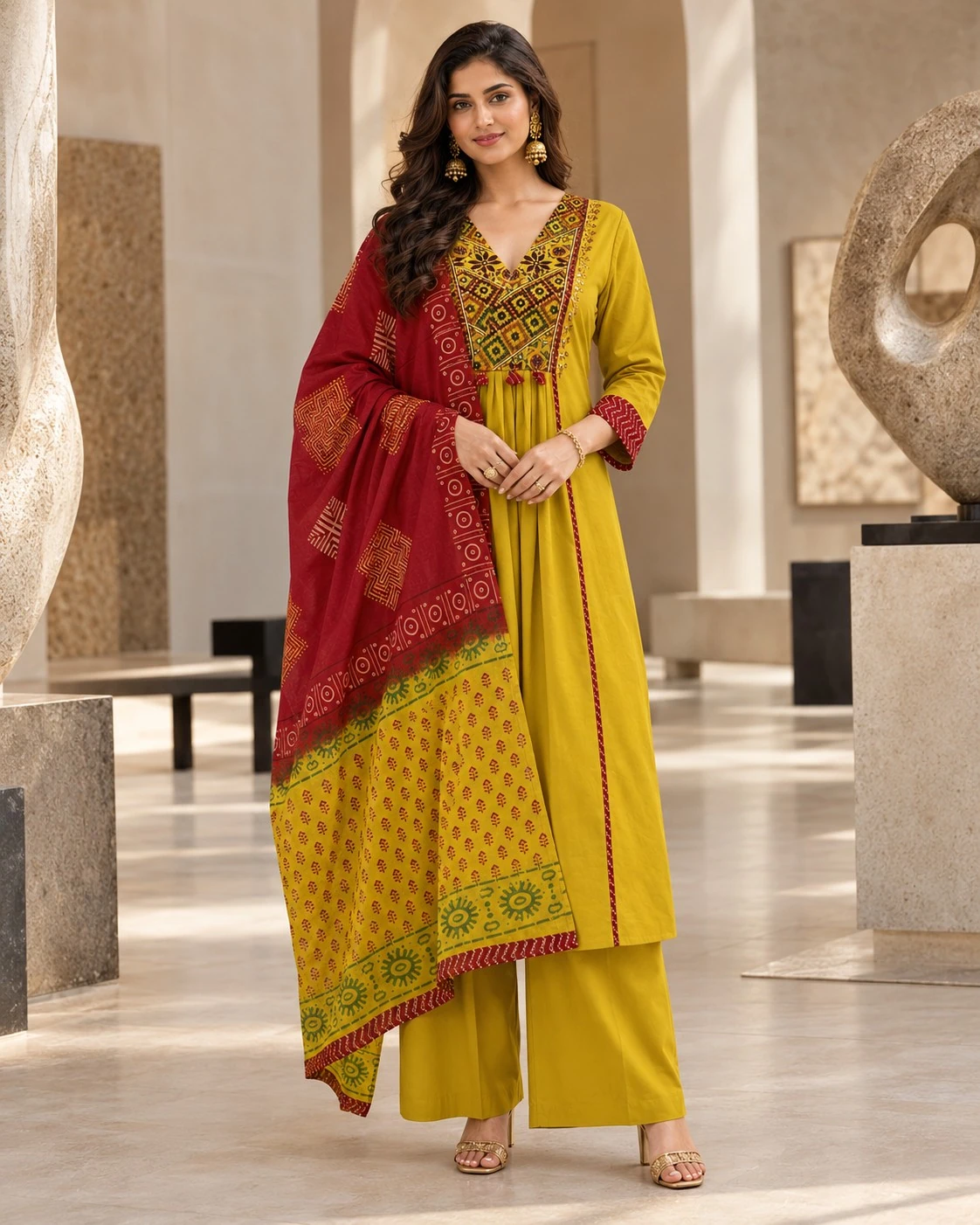
Navratri asks more of an outfit than almost any other festival. You are on your feet for hours, often outdoors, frequently dancing, and the same clothes have to carry you from an evening aarti to a garba ground that does not empty until well past midnight. In Gujarat, where the festival is at its most intense, the practical question is rarely "what looks festive" — it is what will still feel wearable at 1am.
This guide is about the outfits that actually survive that. Not the heaviest lehenga in the shop, but the pieces you will be glad of on night six.
Why cotton earns its place during Navratri
Heavy synthetic fabrics look impressive in photographs and behave badly in crowds. Polyester and most blends trap heat and hold moisture against the skin, which is precisely the wrong quality when you are dancing in an enclosed space with several hundred other people.
Cotton does the opposite. It is breathable, it absorbs moisture rather than repelling it, and it dries reasonably fast. A cotton kurta set with good embroidery reads as festive without the thermal penalty. That matters more on the later nights, when the novelty of a heavy outfit has worn off and comfort decides what you actually reach for.
A useful rule: if you cannot imagine dancing in it for two hours, it is a photo outfit, not a Navratri outfit.
Cuts that work on a garba floor
Movement is the constraint that decides everything else. Three cuts consistently work:
- Anarkali and A-line kurtas — the flare moves with you and photographs well in motion, which is most of what happens during garba.
- Kurta sets with palazzos — full through the leg, so you get the swing of a skirt with far less weight and no risk of stepping on a hem.
- Co-ord sets — the easiest way to look deliberately styled without assembling anything. Useful on the nights when you have twenty minutes to get ready.
What tends not to work: narrow straight-cut kurtas that restrict the stride, and anything with a hem long enough to catch underfoot in a crowd.
Planning nine nights without buying nine outfits
Very few people buy nine complete outfits, and nobody needs to. The practical approach is a small core of pieces that recombine.
- Three or four kurta sets you genuinely like and would wear again after the festival.
- Two pairs of bottoms — one palazzo, one pant — that work with more than one top.
- Dupattas as the variable. Changing the dupatta changes the outfit far more than most people expect, at a fraction of the cost.
- One heavier, more embellished set held back for the nights that matter most to you.
Built this way, four or five pieces cover nine nights, and everything in the set stays useful in October rather than going into storage until next year.
Colour, honestly
Many communities follow the nine-colour tradition, one shade per night. It is worth knowing the colours for the year if the people you are dancing with observe it — but treat it as an option, not an obligation. Plenty of people ignore it entirely and dress by what suits them.
If you do want to follow it without buying nine outfits, the trick is to hold the colour in the dupatta and keep the base neutral. A cream or beige kurta set takes a different dupatta each night and reads as a new outfit in photographs.
In stock now
Cotton kurta sets in stock now
Everything below is live from our catalogue — in stock, in the sizes shown on each page.
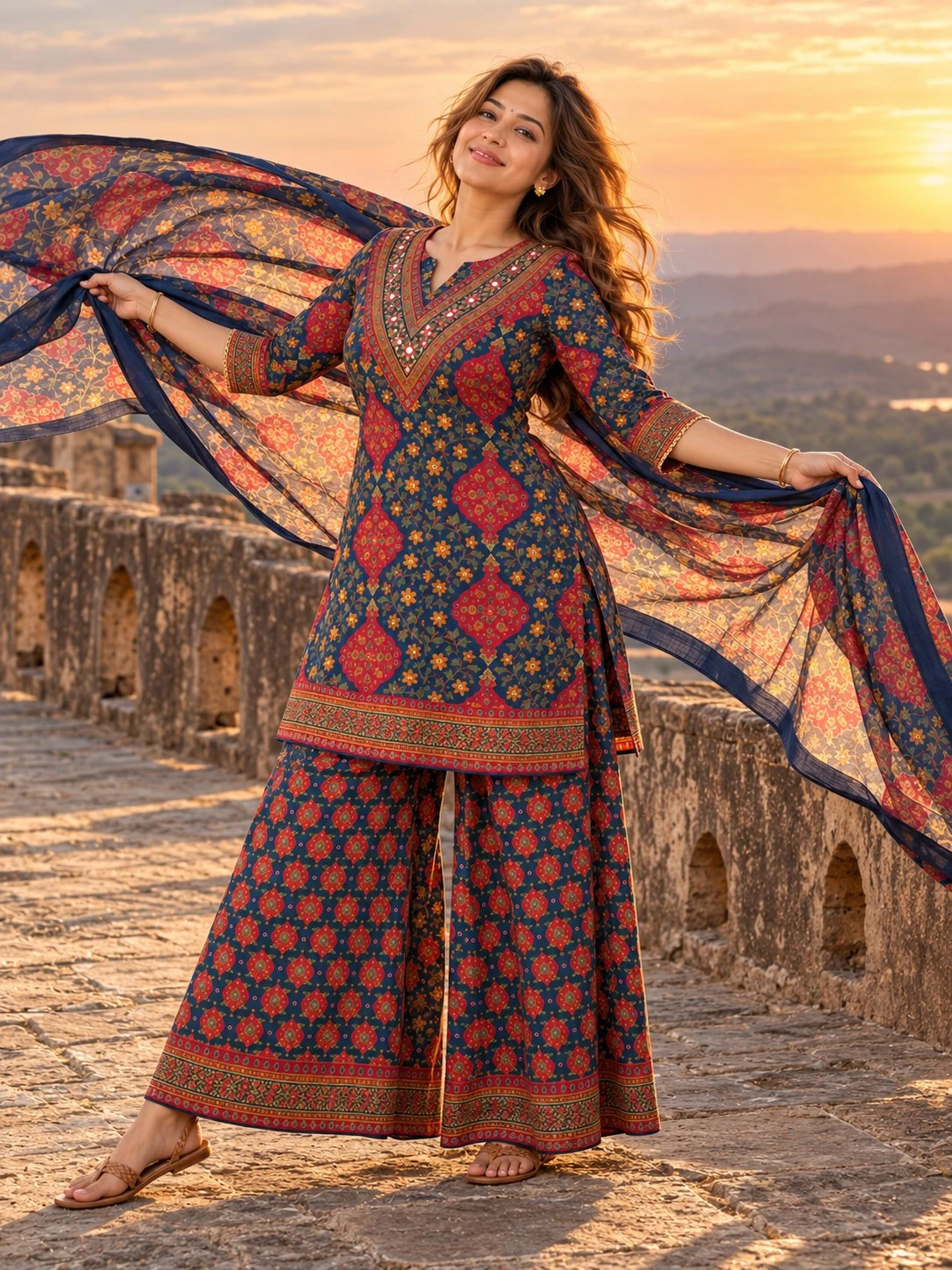
Navy Blue Floral Print Mirror Work Neck Embroidered Pure Cotton Kurta Sharara Set with Dupatta
₹2,199
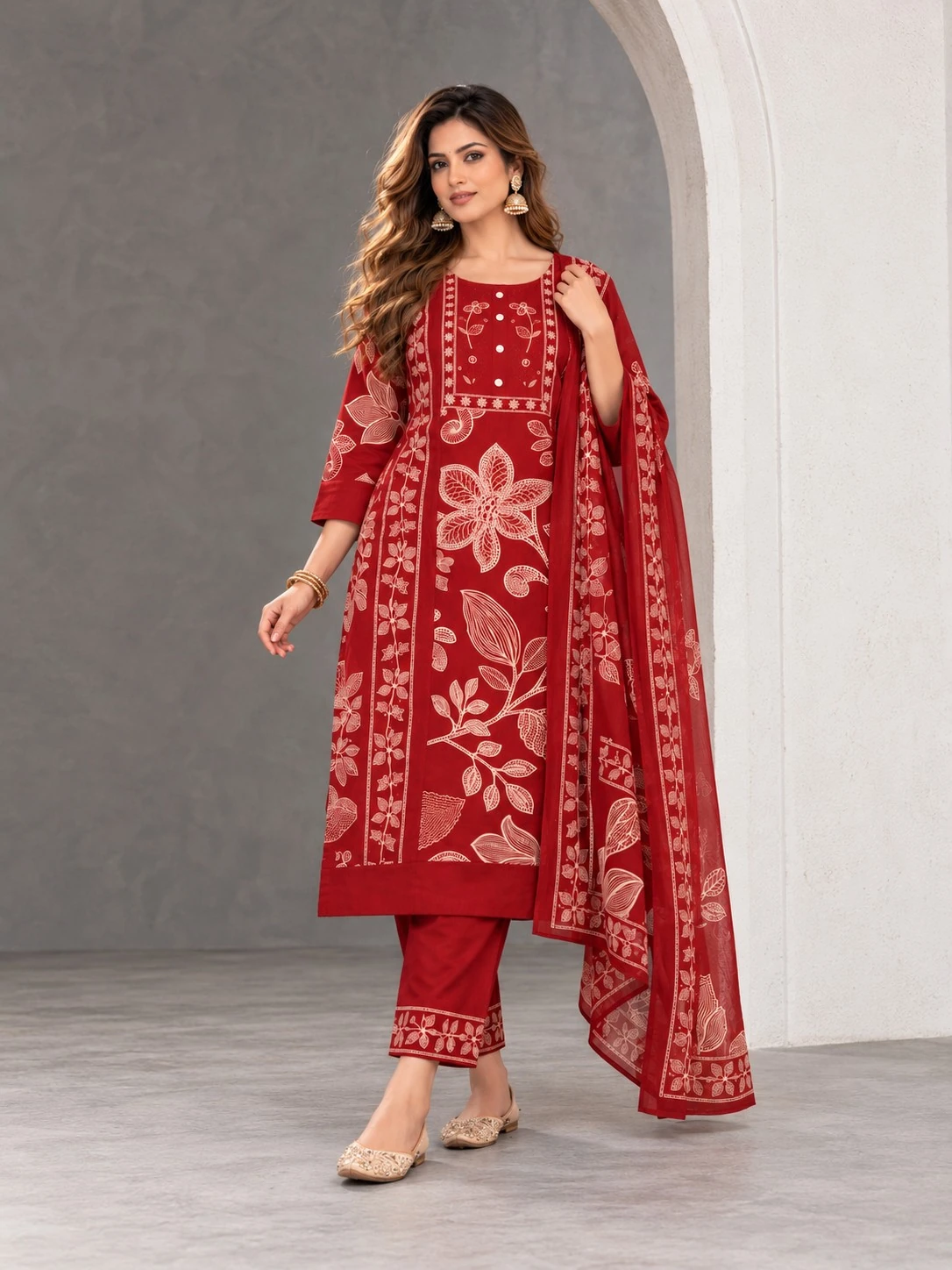
Red Botanical Print Pure Cotton Kurta Set with Embroidered Yoke
₹2,099
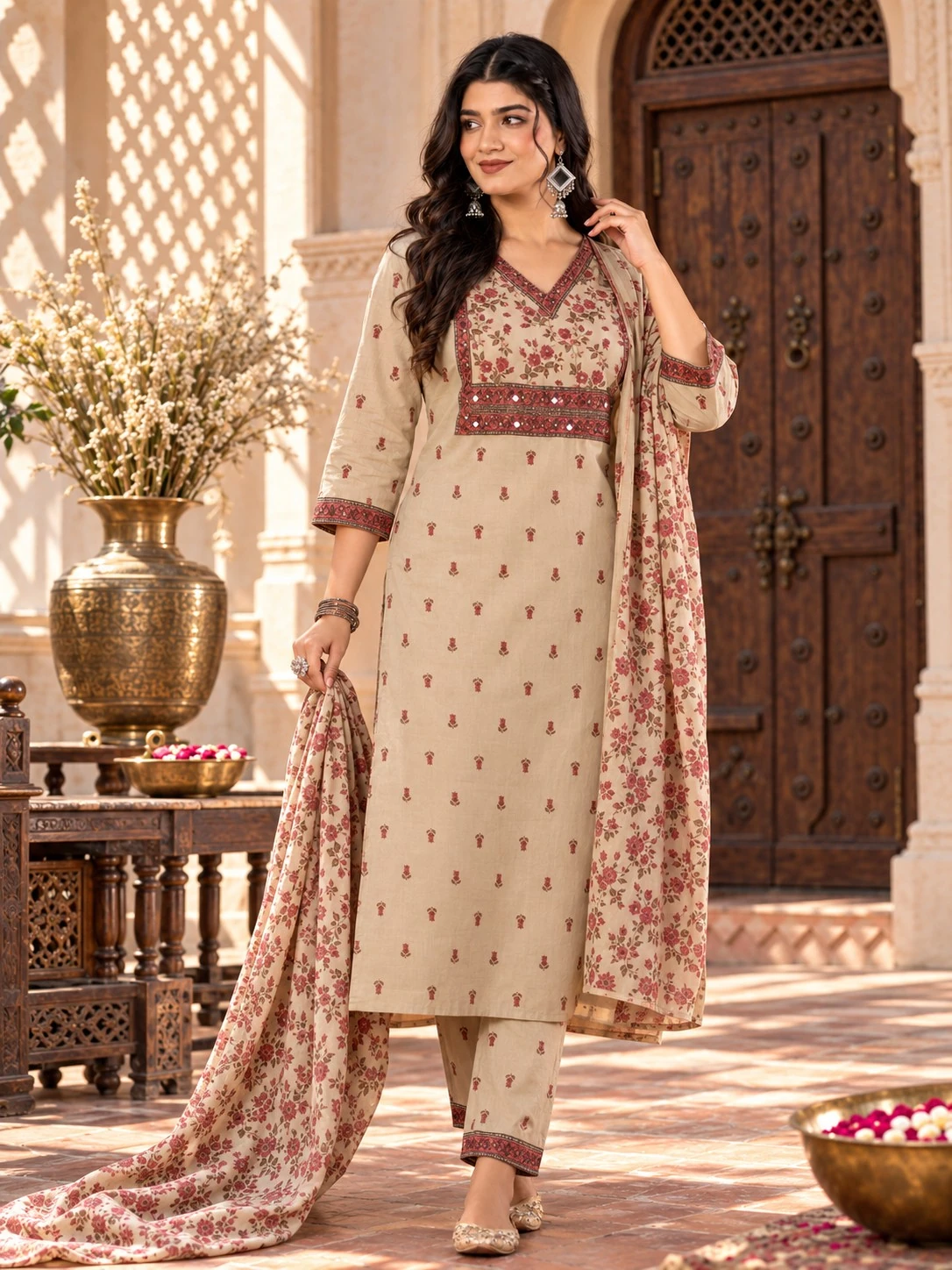
Beige Floral Print Mirror & Sequin Work Pure Cotton Kurta Pant Set with Dupatta
₹2,100
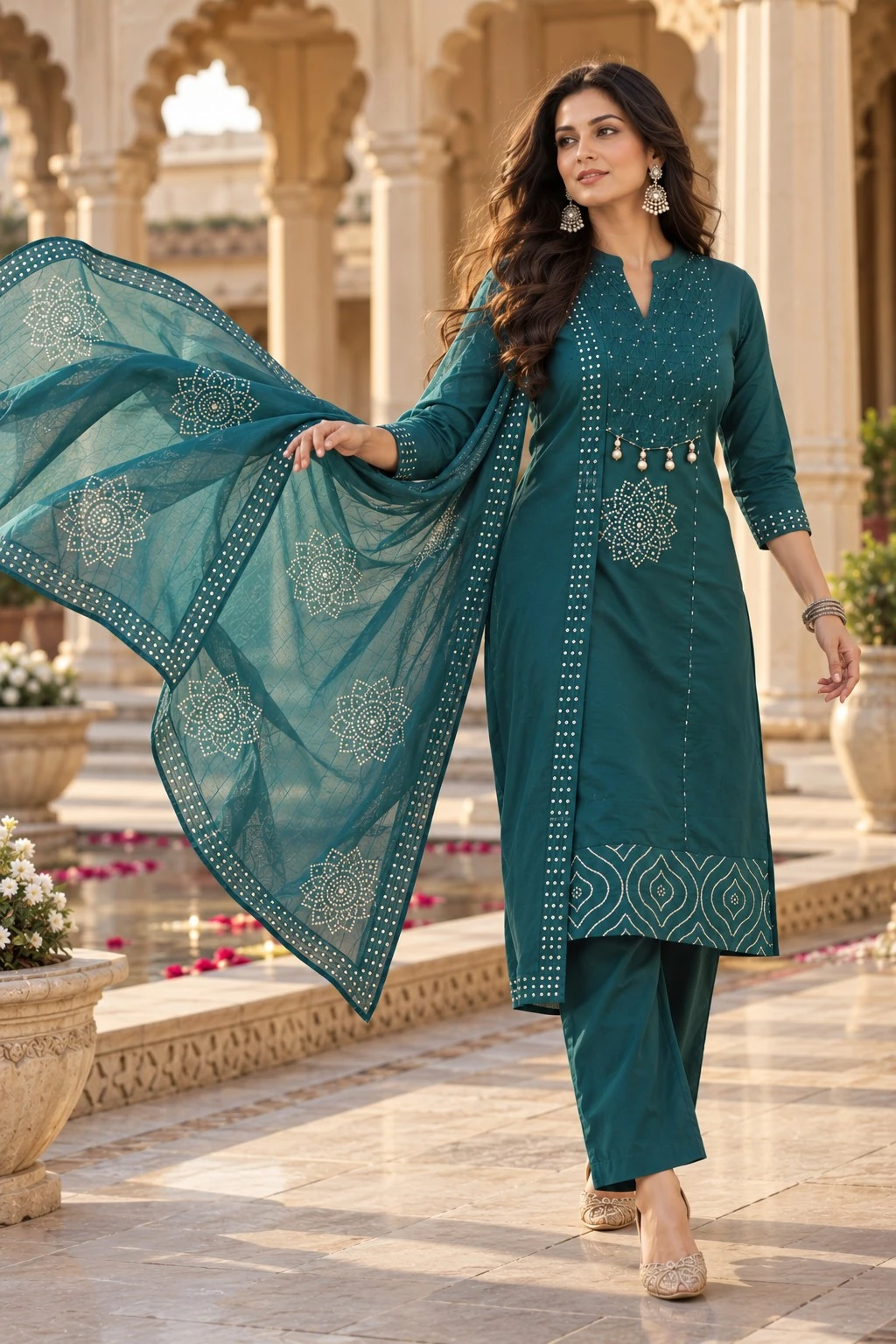
Teal Sequin Mirror Coral Yoke Pure Cotton Kurta Pant Set
₹1,689
What to check before you buy
- Armhole and sleeve — raise your arms fully. Garba involves a great deal of that, and a set that pinches in the fitting room will be unbearable by the third song.
- Hem length against the shoes you will actually wear, not the ones you tried it on with.
- Whether the embroidery sits flat. Raised, beaded work can catch and scratch during close dancing.
- How it washes. You will be washing this more than once during the festival — see our guide on washing cotton kurtas without shrinking them.
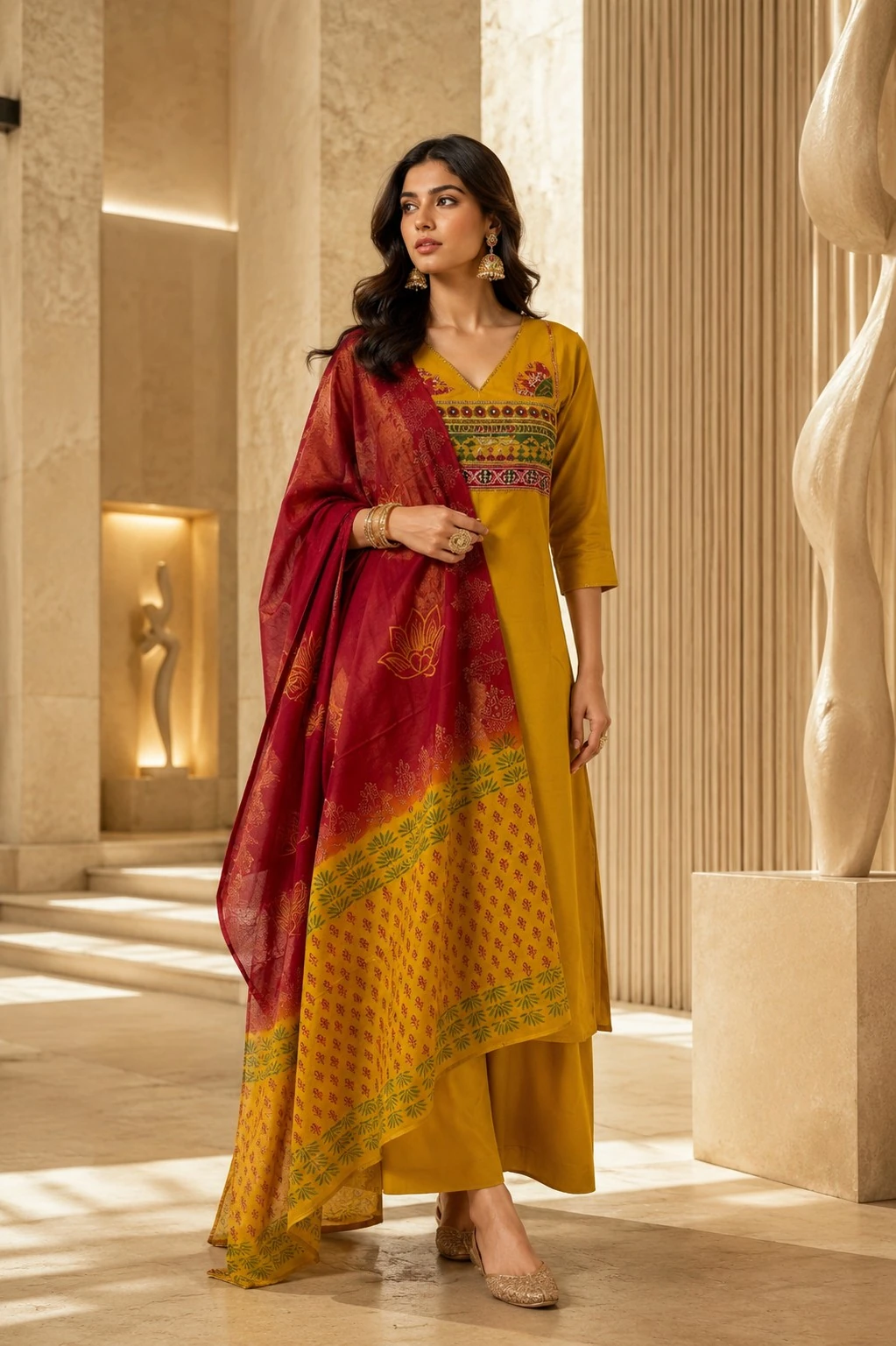
From our range
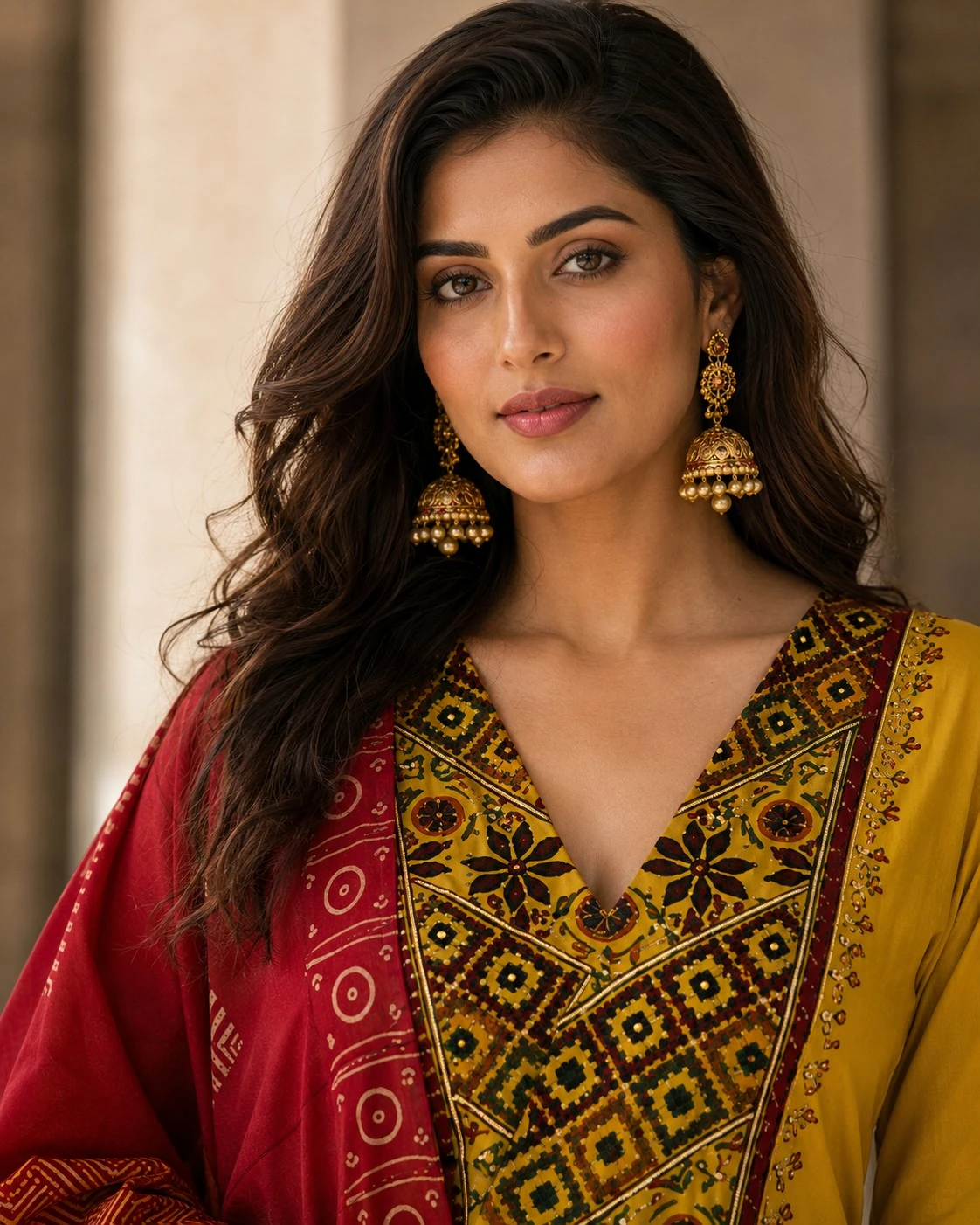
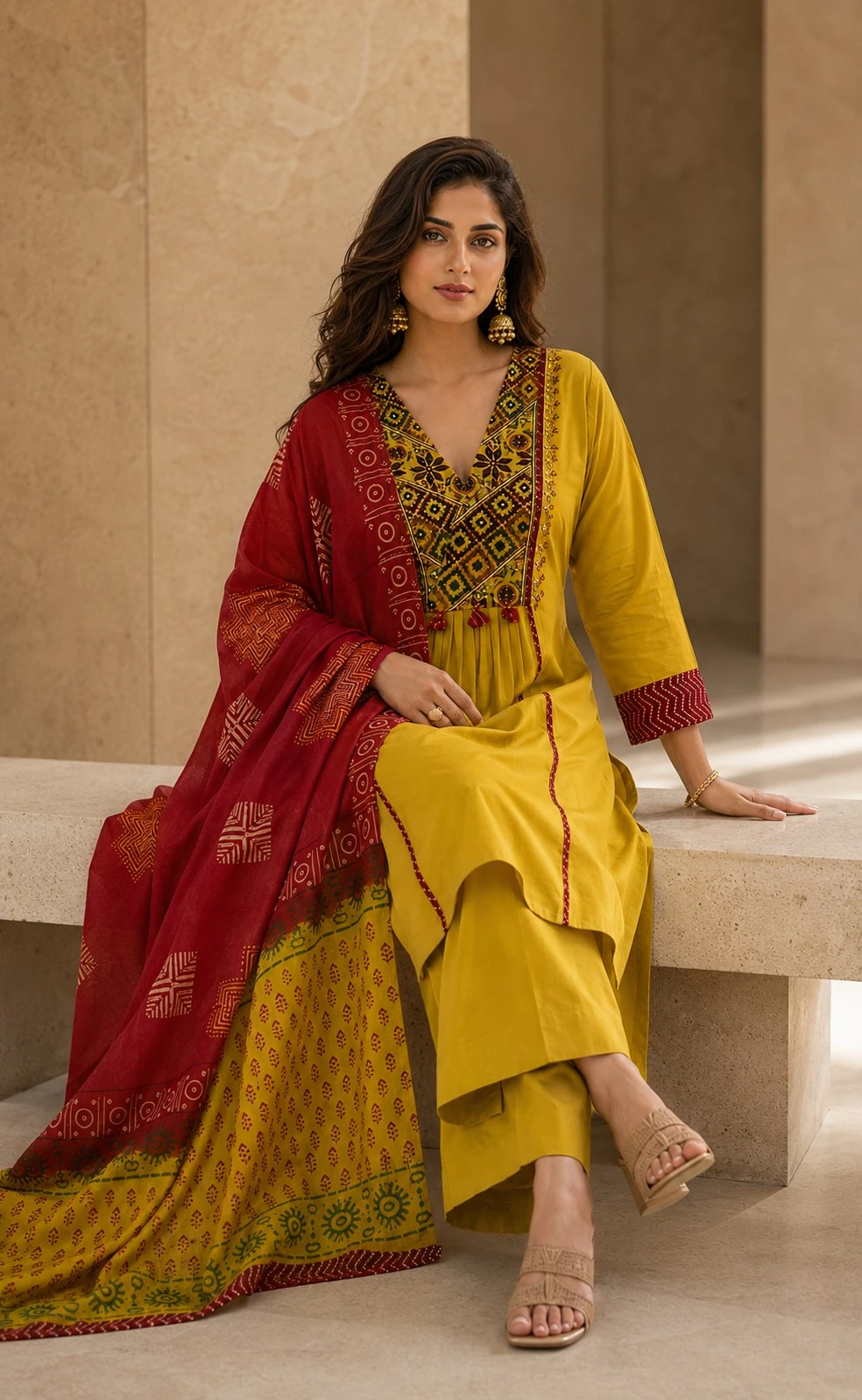
Mustard Mirror Work Cotton Kurta Set with Palazzo & Dupatta
Mustard mirror work with palazzo — the same idea in a warmer shade.
₹2,099
How many outfits do I actually need for Navratri?
Four or five pieces that recombine will cover nine nights comfortably. Changing the dupatta changes the outfit far more than most people expect.
Is cotton festive enough for garba?
Yes — mirror work, gota and embroidery all read as festive on cotton. What reads as "not festive" is usually plain fabric, not the fibre itself.
Do I have to follow the nine-colour tradition?
Only if the people you dance with observe it. If you want to follow it cheaply, keep the kurta neutral and let the dupatta carry the colour.
When should I buy?
Well before the fortnight leading up to the festival. Middle sizes empty first, and larger sizes on popular pieces sell out earliest because fewer are made.
Our festive cotton kurta sets are cut for movement and sized up to 3XL.
Shop the Festive EditFor garba nights, mirror work kurta sets are the traditional Gujarati choice; for pooja and family evenings, see our festive kurta sets.
A note on buying early
Sizes go first, and they go in a predictable order: the middle of the range empties before anything else, and the larger sizes on popular pieces tend to sell out earliest because fewer are made. If you know you want a particular set, the fortnight before Navratri is not the time to decide.
Buy the pieces you would happily wear to a wedding in December, and the festival takes care of itself.